Consider the values
\(\ \log_74,\) \(\log_{\frac47}{0.4},\) \(\log_40.7,\) \(\log_{\frac74}4,\) \(\log_{0.7}0.4,\) \(\log_{0.4}4,\) \(\log_7{0.7}.\ \)
Without using a calculator, determine how many of the given values are positive.
Consider the values
\( \log_{0.2}3,\) \(\log_20.3,\) \(\log_{0.3}1,\) \(\log_23,\) \(\log_{\frac32}\frac23,\) \(\log_{\frac23}2,\) \(\log_{0.3}\frac32.\)
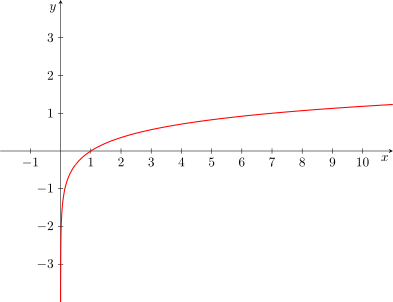
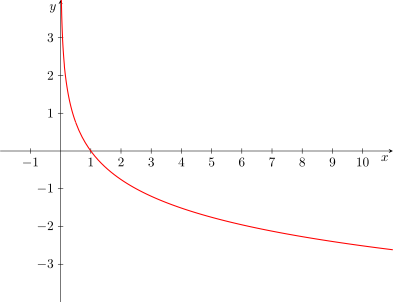
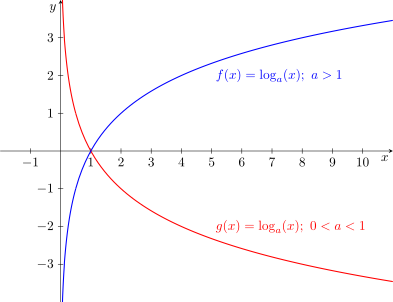
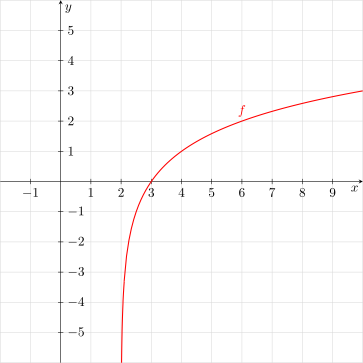
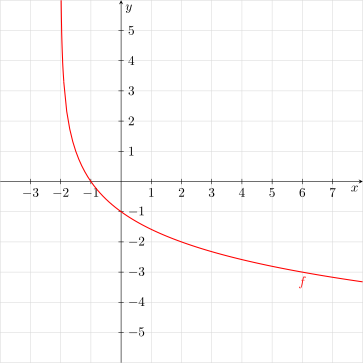
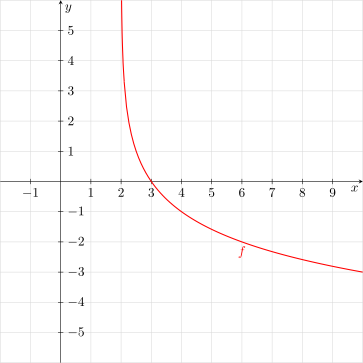
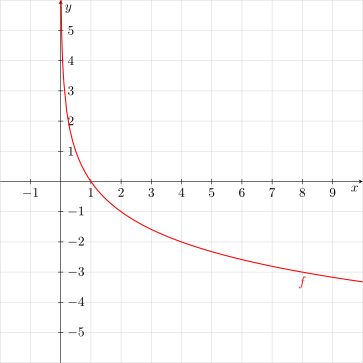
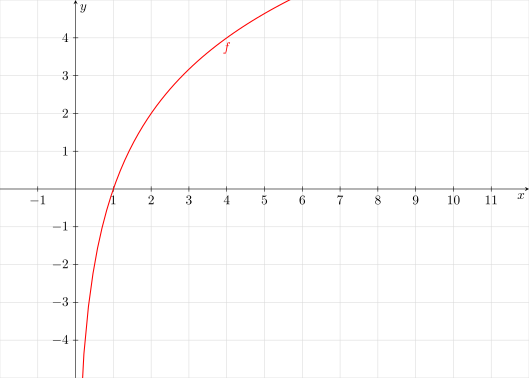
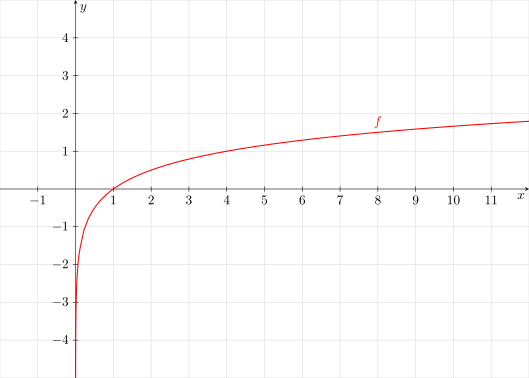
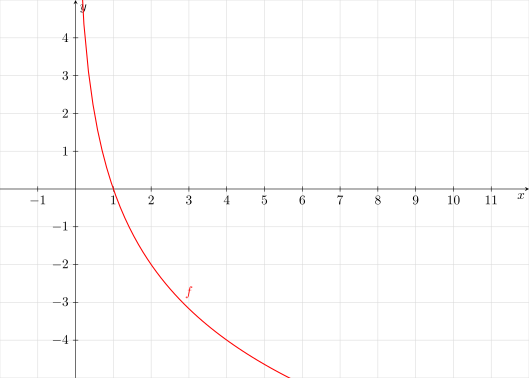
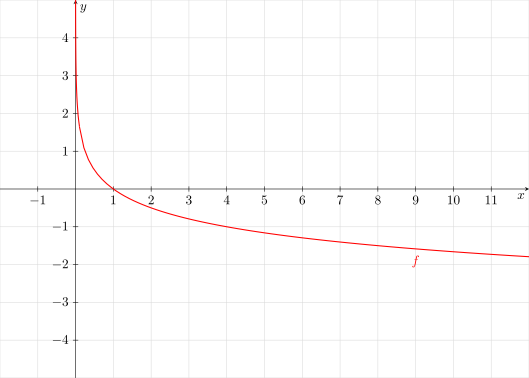
Determine how many of the given values are negative. Use the graph of a logarithmic function given below.
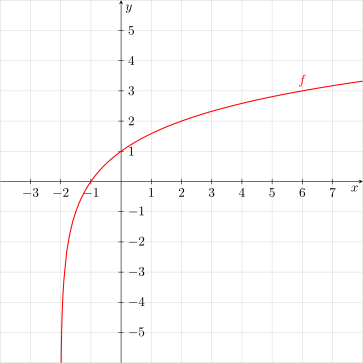
Suppose a logarithmic function \( f \) is unbounded, increasing and \( f \) has an asymptote at \( x=-2 \). Given properties of \( f \), identify a possible graph of this function.